Logohu në mjekët.al
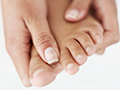
Diabetic wounds
Sent by
Dr. Tauland Qyrdedi
One of the most common complications of Diabetes are hard-to-heal wounds. The numerous factors that increase the likelihood for diabetics to have wounds, which can later become infected, include: Changes (damages) in the blood vessels (microangiopathy) - cause a hypoxic condition in tissue...
read full article
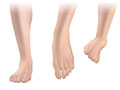
Clubfoot - Twisted foot or Pes equinovarus
Sent by
Dr. Ledian Fezollari
Parents now immediately know if their newborn has a clubfoot. Some know even before the child is born, if an ultrasound is done during pregnancy after week 16. A clubfoot occurs in approximately one in every 1,000 births, slightly more often in boys than in girls...
read full article
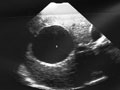
Hydatid disease of the liver
Sent by
Dr. Arjeta Bebeci
The disease is caused by Echinococcus granulosus and Echinococcus alveolaris. Echinococcus granulosus is found mainly in countries where sheep pasturing is present, areas engaged in animal husbandry, and where the internal organs of animals are allowed to be used. These areas include Southern Europe, the Middle East, Australi...
read full article
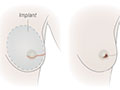
Prophylactic mastectomy
Sent by
Dr. Rezarta Kapaj
Breast cancer, being the most common cancer among women, draws attention to an important concept, the concept of “high-risk breast”. The interest in further information on this topic has been increasing, not only among doctors but also among patients. Genetic analysis is the most...
read full article

Colposcopy
Sent by
Dr. Elton Peci
Colposcopy is as simple an examination as a pap-test. The gynecologist will examine the cervix through a microscope called a colposcope. During the colposcopic examination, special liquids (acetic acid and Lugol's solution) are applied to the cervix, which help in detecting change...
read full article

Anemia
Sent by
Dr. Shk. Sotiraq Lako
The first function of blood, its identification, is the transport of oxygen. Anemia, comes from Greek (Αναιμία), and means "without blood", referring to the deficit of erythrocytes consequently leading to a decrease in Hb (which is found only within erythrocytes) resulting in paleness and fatigue...
read full article

Teratogenicity and medications
Sent by
Dr. Ilda Ndreko
Changes (damages) in the blood vessels (microangiopathy) - cause a hypoxic condition (insufficient oxygen supply) in tissues, which in turn leads to spontaneous skin damage, hinder the normal healing of wounds and infections...
read full article
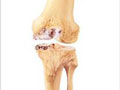
Unicompartmental knee prosthesis
Sent by
Dr. Ervin PRIFTAJ
Knee prosthesis (knee arthroplasty) has proven to be a very effective tool in the surgical treatment of knee osteoarthritis for many years. Recently, the Unicompartmental Knee Prosthesis has also emerged as a possible option for some patients. The knee consists of three compartments: the medial compartment, the lateral compartment, an...
read full article

Epilepsy in children
Sent by
Dr. Shk. Artan Haruni
The treatment of Epilepsies is done with antiepileptic drugs (AED). Only two-thirds of children with Epilepsy may have complete control of seizures from medication. After 1993, we have an expansion in the production of new generation antiepileptics which, compared to the old generation of antiepileptics, are more effective and have fewer side effects...
read full article

Multiple Sclerosis and HBOT
Sent by
Dr. Tauland Qyrdedi
Multiple Sclerosis (MS) is the disease that causes demyelination in the Central Nervous System. This disease is prevalent in 500 thousand people in the USA and around 2.5 million worldwide. Other damages it manifests are axon damage, inflammation of the meningeal membranes (the membranes tha...
read full article