Logohu në mjekët.al

Male Infertility
Sent by
Dr. Elton Peci
The problems that cause infertility in males are very common. Male infertility accounts for 25-50% of infertility cases.
The problems that can cause male infertility can be divided into two major groups: problems that affect sperm production by the testicles and problem...
read full article

Alcohol and Alcoholism
Sent by
Dr. Viktor QERESHNIKU
Alcoholic drinks have been known since ancient times. As long as there was water, fruits with sugar content, and fermentation, all the conditions were created for alcoholic drinks to form naturally. Coming into contact with alcoholic drinks, humans experienced the effects of both moderate and abusive consumption of these beverages...
read full article
Bleeding in prepuberty
Sent by
Dr. Ilda Ndreko
Menarche (the first cycle) occurs when the breast has developed to Tanner stage III or IV. Normally, menarche occurs at the age of 11-14 years. A normal cycle lasts up to 7 days or less, with a volume up to 80ml or less, and a frequency of 21-45 days. The menstrual cycle occurs when there is a coordinated function of the axis...
read full article
Enlargement of the Prostate
Sent by
Dr. Shk. Rezar Rusi
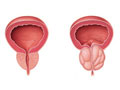
The enlargement of the Benign Prostate, also known as Benign Prostatic Hyperplasia (BPH), is a common condition in men over 50 years old that increases with age. It can cause difficulties during the urination process. If the enlarged prostate is not treated, it can create difficulties i...
read full article

Ectopic pregnancy
Sent by
Dr. Ilda Ndreko
It's a time when anyone who doesn't have a smartphone in hand is different from the others, whoever doesn't know how to use social networks is considered 'outdated', everyone on social networks, children, teenagers, students, adults, even the elderly. Everyone has a reason for using it, some for fun, some for work, and so on...
read full article
Echo-Endoscopy EUS
Sent by
Altin CEKODHIMA
Endoscopic ECO is a combination of echo and endoscopy to obtain images and information about the digestive tract, organs, and surrounding tissues. Endoscopy is a procedure where a flexible tube with a mini-camera is inserted through the patient's mouth or rectum to see inside the digestive tract...
read full article
Urinary bladder stones
Sent by
Dr. Shk. Rezar Rusi
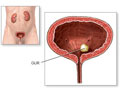
Urinary bladder stones are solid masses of mineral salts, located in the bladder. Stones form when urine, staying long in the bladder, concentrates making possible the crystallization of mineral salts. This stagnant and concentrated urine is often a result of the inability to completely empty the bladder...
read full article

Breast tumors in young women
Sent by
Dr. Riselda Tahiraj
Breast cancer is rare in young women, with 6%-7% of new cases diagnosed in women under 40 years old. The risk of breast cancer increases with age. Breast cancer is a leading cause of death in women under the age of 40, and diagnosis is often not made in time. The clinical course of young women with breast cancer usually involves...
read full article

Darwinian Evolution of Cancer
Sent by
Dr. Shk. Sotiraq Lako
Recognizing Darwinian Evolution of Cancer is essential to understand the main problem we have in treating metastatic malignant tumors (cancer), resistance and recurrence of the disease and in most cases death from it. But recognizing the Darwinian Evolution of cancer is also the strongest weapon...
read full article

Leukemia
Sent by
Dr. Shk. Sotiraq Lako
Leukemia (leucemia, leukosis) represents a heterogeneous group of malignant tumors (neoplasms), with varying degrees of proliferation, differentiation, and cellular maturation, originating from the precursor cells of the blood's formed elements in the Bone Marrow (BM). Leukemia is classified among the "liquid" tumors and differ...
read full article