Logohu në mjekët.al

Temptation stones
Sent by
Dr. Rozana Aleksi
Gallstones form when the fluid collected in the gallbladder thickens or hardens into small pieces of material similar to stones. The fluid, called bile (gallbladder fluid) helps in the digestion of food fats. Bile (gallbladder fluid) is produced in the liver, then stored i...
read full article

Malignant and benign tumors of the stomach
Sent by
Dr. Shk. Albana Duni
In our body, healthy cells grow and divide in an orderly way. This process is controlled by DNA, which is a genetic material, containing instructions for every chemical process in our body. Some DNA genes promote cell division, while others slow it down, or program it...
read full article

When IVF ends without success
Sent by
Dr. Elton Peci
The first question a patient will ask in case they get a negative test after an In Vitro Fertilization (IVF) procedure is "Why did my IVF cycle fail?" A failed IVF cycle is a very delicate and very difficult moment for the patient… It is painful because all the hopes tha...
read full article
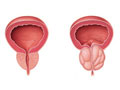
Enlargement of the Prostate
Sent by
Dr. Shk. Rezar Rusi
The enlargement of the Benign Prostate, also known as Benign Prostatic Hyperplasia (BPH), is a common condition in men over 50 years old that increases with age. It can cause difficulties during the urination process. If the enlarged prostate is not treated, it can create difficulties i...
read full article

Autologous plasma therapy
Sent by
Dr. Ardiana Sinani
Since ancient times, people have used blood as their food, and then from mythology or various beliefs it has been believed that drinking blood would help the body to regenerate, heal from various diseases or even rejuvenate. The use of blood as medical therapy b...
read full article

Quadriceps tendon
Sent by
Dr. Ledian Fezollari
The quadriceps tendon works with muscles in the front part of the thigh - the quadriceps - with the function of straightening the leg. The chance of injury to the tendon exists for everyone but is more common among middle-aged people who play sports involving running or jumping...
read full article

Ozone therapy in disc herniation
Sent by
Dr. Ilir Agastra
Back pain is one of the most common human complaints. It is estimated that about 80% of Americans have back problems at least once in their life. In the USA, the annual cost of back pain is 20-100 billion dollars. This cost is 2-3 times higher than that of caring for heart diseases...
read full article
Echo-Endoscopy EUS
Sent by
Altin CEKODHIMA
Endoscopic ECO is a combination of echo and endoscopy to obtain images and information about the digestive tract, organs, and surrounding tissues. Endoscopy is a procedure where a flexible tube with a mini-camera is inserted through the patient's mouth or rectum to see inside the digestive tract...
read full article

Acute pancreatitis
Sent by
Dr. Arjeta Bebeci
With acute pancreatitis, we understand the immediate inflammation of the pancreatic parenchyma and neighboring structures, during which activated pancreatic enzymes cause autodigestion of the pancreas itself. Causes: Biliary pathologies, Gallstones, Infections (cholecystitis or cholangitis...
read full article

Ozone therapy
Sent by
Dr. Ilir Agastra
Ozone is a molecule with three Oxygen atoms. Its name comes from Greek where the word "ozein" means "to smell, has aroma". Ozone was discovered by a German chemist (Ch.F. Schonbein) in 1848. At room temperature, it is a colorless gas with a characteristic smell (similar to the one felt afte...
read full article